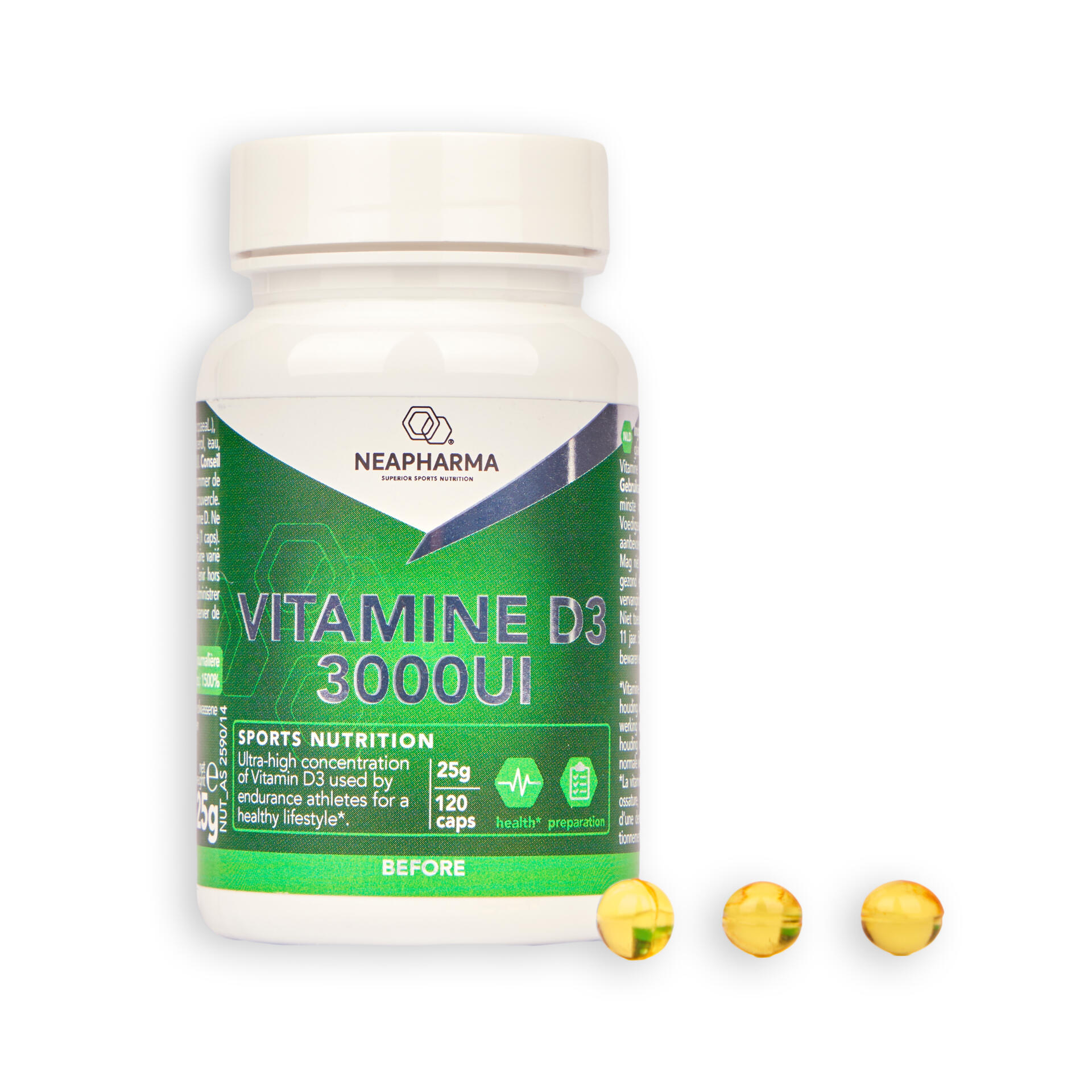


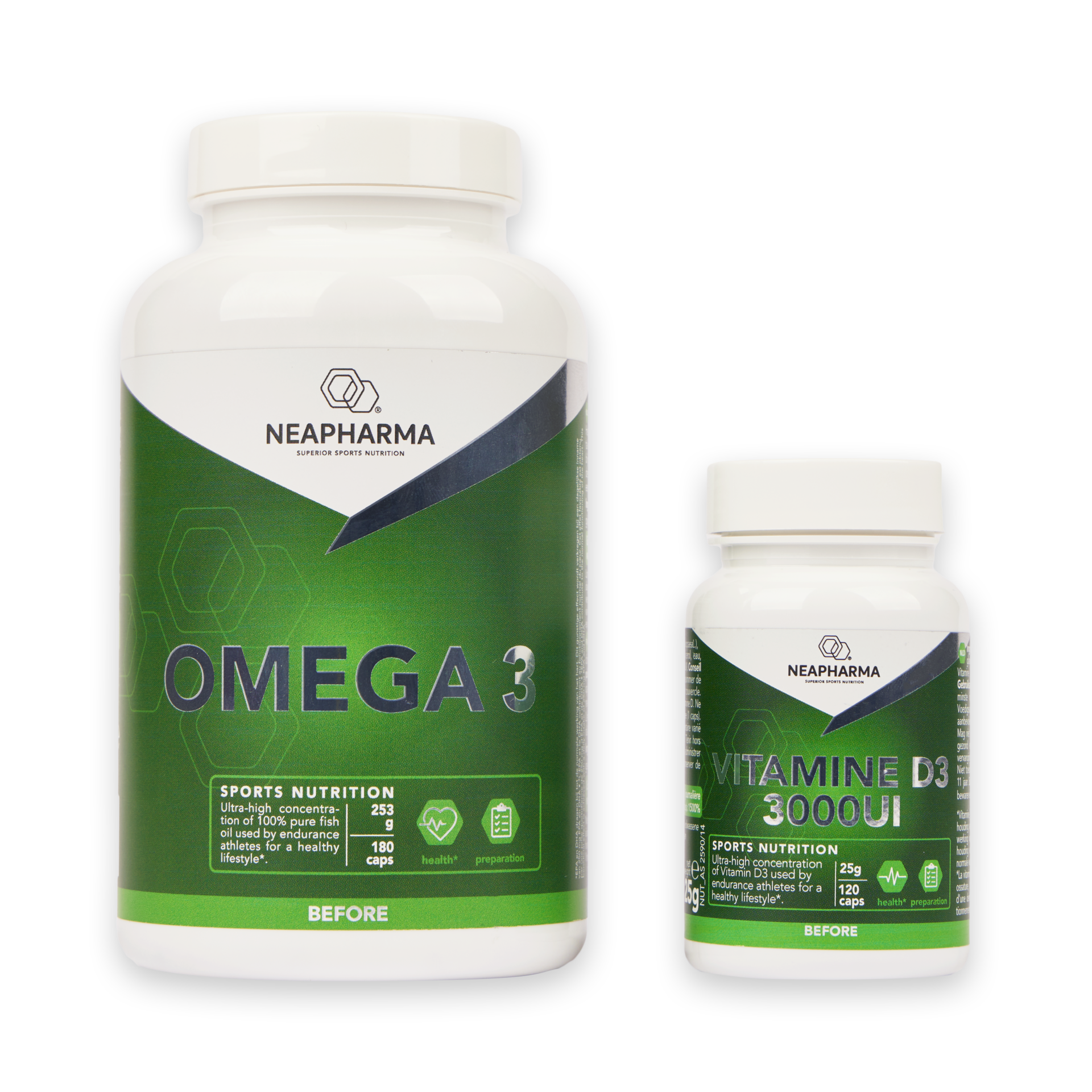
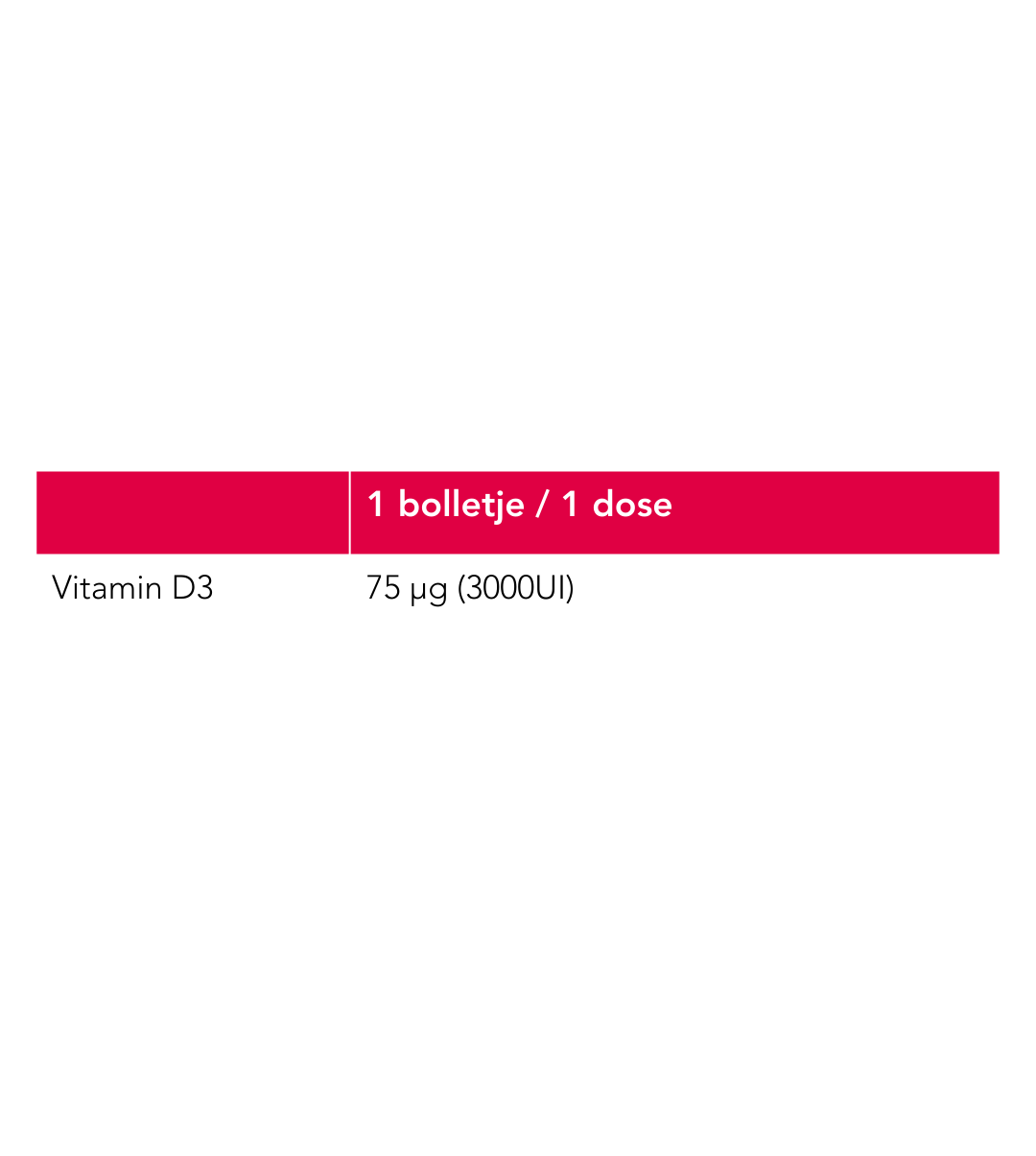





What is vitamin D?
Vitamin D exists in two forms: ergocalciferol (vitamin D2) and cholecalciferol (vitamin D3). Ergocalciferol is absorbed less efficiently by the body. That is why vitamin D3 is always the preferred choice.
Cell division****
Vitamin D plays a role in the process of cell division. This is the process by which new cells are created and old or damaged cells are replaced. Cell division is essential for
- muscle recovery after training
- recovery of tendons and bone tissue
- maintenance of your immune system
- general tissue renewal
Muscle function*
Vitamin D contributes to the maintenance of normal muscle function. It helps your muscles work normally, contract properly and produce force.
Absorption and utilisation of calcium and phosphorus**
Vitamin D contributes to the normal absorption and utilisation of calcium and phosphorus. This means vitamin D ensures that calcium and phosphorus from your diet are effectively absorbed and used by your body.
- calcium and phosphorus are building blocks of bones and teeth
- they are necessary for muscle contraction
- they play a role in nerve signalling
- they support energy processes inside the muscle cell
Immune system***
Vitamin D contributes to the normal function of the immune system. It helps your immune system work efficiently and correctly. Not overreacting, but not reacting too slowly either.
Intensive training temporarily puts stress on your immune system. Vitamin D helps maintain that balance, so you are less likely to get sick just when your training block is going well.


